Hotel TV: how the channels reach the rooms, exactly
A hospitality proposal fails on details rather than on the channel list: what arrives at the property, what runs on the in-house network, what the televisions in the rooms can actually decode, how much uplink it costs, and who installs what. This page answers those in the order a technical director asks them, and says plainly which answers depend on your property rather than on us.
How the signal reaches the rooms
The signal reaches the property encrypted, over the internet connection it already has. Our playout software receives and decrypts it on site, running on our own hardware, and from there the channels go to the rooms as UDP multicast or as DVB-C.
Nothing is received off air. There is no dish, no LNB, no multiswitch, no CAM and no local headend rack, which is also why the line-up is not limited to the satellites above the roof: the bouquet is assembled at our headend from 1685 channels, so a hotel in Spain can carry German, Polish, Arabic and Brazilian channels on the same television.
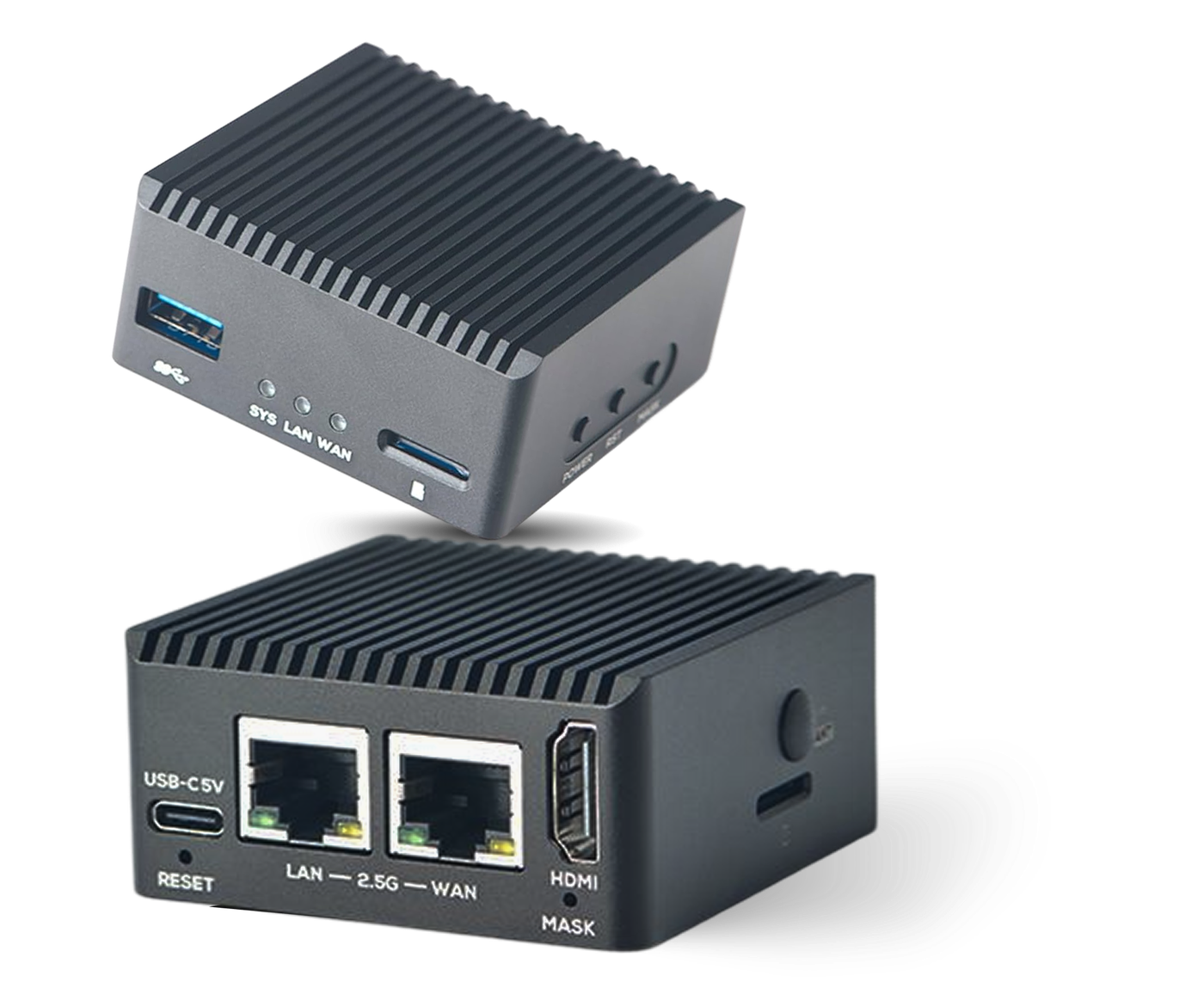
Our player appliance
The box arrives configured for your channel list. Connect it to the internet and to the in-house network; it terminates the encrypted SRT feeds and puts out UDP multicast MPEG-TS on the local network, exactly as a headend would. Nothing else is installed and nothing is licensed locally.
Our software on your server
The same conversion on hardware you already run: SRT, HLS or RTMP in, UDP multicast out, with a web interface showing every channel, its bitrate and its drop count. The choice between the box and the server is yours; the output is identical.
Into your existing headend
Properties that already have a headend and middleware take the SRT feeds straight into it and keep their own multicast plan, channel numbering and modulators, including a DVB-T or DVB-C output where the in-room sets are tuners rather than IP clients. We deliver the contribution and stop at your input.
Smart TV app or casting
Where the televisions are IP-capable, the same channels run in a white-label app on Samsung Tizen, LG webOS, Android TV and Apple TV, with the property's name on the home screen, bouquets by guest language, EPG and catch-up. Guests cast from their own phones over the guest network, and no multicast is needed at all.
Delivery specification
| To the property | Encrypted SRT (AES-256; caller, listener or rendezvous) or adaptive HLS and MPEG-DASH over HTTPS, from the two core sites nearest the property |
|---|---|
| In-house output | UDP multicast MPEG-TS, one group per service, IGMPv2 or v3, group range and TTL to your own addressing plan; unicast UDP where the switch fabric cannot do multicast |
| Video | Up to 1080p25; 3 Mbps per HD channel, with a capped CBR profile at 2 Mbps for thin uplinks |
| Audio and subtitles | Original audio and subtitle tracks preserved as transmitted, so a guest selects their own language on the television |
| Guide | EPG and metadata: a priced add-on at EUR 9 per channel / month. XMLTV or JSON over REST, 14 days forward, in up to 12 languages. |
| Latency | Under 400 ms glass-to-glass to the appliance on a normal path; 4 to 8 s where a room is served by HLS / DASH in an app |
| Televisions | Hospitality-mode Samsung and LG displays, standard set-top boxes, Chromecast, or our white-label app on Tizen, webOS, Android TV and Apple TV |
| Monitoring | Per-channel bitrate, continuity errors and loss, alarmed 24/7, reported per property |
| Rate | EUR 40 per channel per month, per property, any number of rooms, no setup fee, 30 days notice |
The playout box we ship to the property
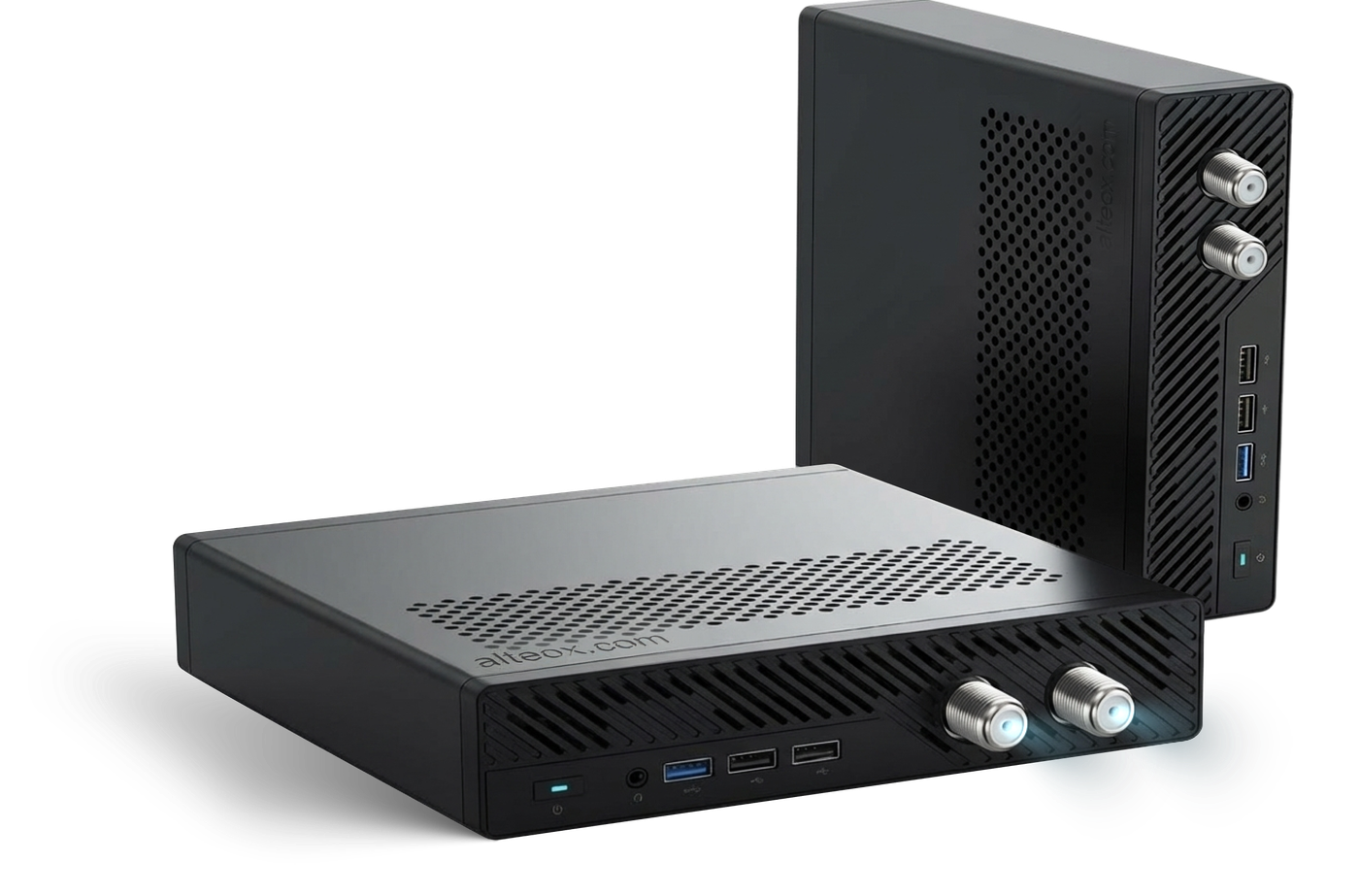
What arrives at the property is a box rather than a project. We ship a dedicated playout appliance, already holding the channel list you ordered, and it needs two cables: one to the internet connection you already pay for, one to the in-house network. It pulls the encrypted feeds itself, so nothing is received off air and nothing is licensed locally.
The line-up on it is configured by us, remotely, from our own software. Adding a channel for a guest profile you did not have last season, changing the numbering, moving a multicast group or replacing a feed a broadcaster has relocated is a change we make from our side and the appliance picks up. Nobody on site touches it after it is racked, and there is no interface for your staff to learn.
There are two outputs, and the wiring the building already has decides which one you use. UDP multicast MPEG-TS on the local network, one group per service, is what IPTV televisions and in-room middleware expect. DVB-C is for the properties where the sets are tuners: the appliance modulates the same channels onto the coax already in the walls, and a television finds them with an ordinary channel scan.
Both outputs can run at once from the same box, which is what a refurbishment usually needs: a new tower on IP and an older wing still on coax, one appliance, one channel list. Either way, the uplink carries each ordered channel once rather than once per room, so the internet connection is sized for the number of channels and not for how many televisions are switched on.
- One appliance per property, delivered configured for the channels you ordered
- Channel line-up, numbering and multicast plan set by us, remotely, at any time
- UDP multicast MPEG-TS out, one group per service, IGMPv2 or v3
- DVB-C out onto the property's existing coax, for televisions that are tuners
- Both outputs together where part of the building is IP and part is still coax
- Managed in our own software: bitrate, uptime and alarms per channel, watched 24/7
- No dish, no headend rack, no local licence and nobody on site to train

What the televisions and the in-room system need
Two things make an in-room system work: a multicast group per service, and a guide it can import. We supply both, plus a channel map per property stating group, port, service name, logo and EPG identifier, so existing middleware is configured rather than replaced.
Hospitality-mode displays from Samsung and LG take the multicast stream as they would from a local headend, keep their own channel banner, volume limits and welcome screen, and are cloned across the rooms as usual. Sets that are tuners rather than IP clients are served by a modulator behind the appliance: the third route above, and a common one in properties refurbished before IP televisions were standard.
Where you want the guest-facing interface to be yours rather than the television manufacturer's, the white-label app does that on the same channels and the same guide. It is a different investment in the rooms and we will say so: worth it where casting, catch-up and languages matter, not worth it where guests want fifty channels and a remote that works.
- A channel map per property: multicast group, port, service name, logo, EPG id
- Hospitality-mode Samsung and LG displays supported directly
- Standard set-top boxes and Chromecast devices supported
- A DVB-T or DVB-C modulator behind the appliance where the sets are tuners
- White-label app on Tizen, webOS, Android TV and Apple TV where the interface should be yours
- IGMP snooping on the access switches, and multicast permitted from the appliance VLAN to the room VLAN
PMS, billing and entitlement
The commercial model deliberately removes most of this. The hospitality rate is per channel per month per property, not per room and not per guest, so there is nothing to meter at check-in and no revenue share to reconcile. Television is a fixed cost of the room, like the kettle.
That also means we do not sell a property management system integration as a product, and we would rather say so than imply one. Room state, folio posting and welcome messaging belong to the in-room system you already run, whether that is your middleware or the television's own hospitality platform, and it keeps talking to your PMS exactly as it does today.
Where a property does want per-room entitlement, paid tiers or the guest's name on the screen, that logic lives in the white-label app, which can take a room and folio identity from your PMS over its REST API. What the integration involves depends on which PMS you run, so we scope it per property rather than claiming a certified connector for a system we have not seen.
Who provides what
- An internet connection sized for the number of channels you order, with a fixed address or a NAT we can traverse
- A rack or shelf position and power for the appliance, or a server for the software
- The in-house network: switches with IGMP snooping, VLANs, and multicast permitted to the room VLAN
- The televisions, and where they exist the middleware and the modulators
- The guest mix, the channel wish-list, and the areas to be served
- A named technical contact for commissioning and for the NOC
- Capture, transcoding, encryption and packaging of every channel at the core sites
- The encrypted SRT or adaptive HLS / DASH feeds, from the two core sites nearest the property
- The appliance configured for your channel list, or the software licence for your own server
- The channel map, the EPG feed and the multilingual metadata
- 24/7 monitoring per channel per property, and a NOC your contact can reach
Getting a property on air
Send us the property, the guest mix and the channels you want. We quote EUR 40 per channel per month for the property and issue endpoints within 12 hours. Volume discounts apply automatically from ten channels, a 12-month term takes off a further 10% and 24 months 15%, and there is no setup fee.
A refurbishment does not have to wait for us, and we do not have to wait for it: because nothing is received off air, a property can be commissioned in an afternoon and the channel list changed the month a guest profile changes. Groups run one contract, one channel list and one invoice, with each property served from the core site nearest it.
To see it on your own network first, take the free three-day trial: pick a few channels, tell us where the property is, and we issue both an SRT endpoint and an HLS / DASH manifest without a sales call. That is enough to prove the uplink, the multicast path and the televisions before anything is signed.
Questions a technical director asks
Do we need a dish, a headend or an engineer on site?
No. The channels arrive over the property's existing internet connection as encrypted SRT or adaptive HLS / DASH. Either our appliance converts them to UDP multicast for the in-room system, or your own headend takes the SRT feeds directly, or IP-capable televisions play them in an app. Nothing is received off air and nothing is licensed locally.
How much uplink does a property actually need?
Channels times the per-channel profile, plus 20% for retransmission, and not per room because multicast carries each channel once however many televisions are on. Twenty channels at 3 Mbps needs roughly 70 Mbps; the same twenty at a 2 Mbps capped profile needs under 50. The app and casting routes are unicast and scale with concurrent viewers instead, at up to about 4.1 Mbps each on the top rung.
Will it work with the televisions we already have?
Hospitality-mode Samsung and LG displays and standard set-top boxes take the multicast stream directly. Sets that are tuners rather than IP clients are served through a modulator behind the appliance. Where the televisions are recent and IP-capable, the white-label app gives you your own interface on them instead.
What does the hospitality rate cover, and what does it not?
EUR 40 per channel per month for the property, any number of rooms, covering in-room viewing inside that property.
Can guests watch the channels from their own country?
That is what the bouquet is for. The line-up is assembled at our headend rather than off the satellites above the roof, so a property carries channels for the nationalities it actually hosts, in up to 12 languages, and the list can differ per property within a group.
Do you integrate with our PMS?
The rate is per property rather than per room, so nothing has to be posted to a folio for television to work, and the in-room system keeps talking to your PMS as it does today. Where you want per-room entitlement or the guest's name on the screen, the white-label app can take that identity from your PMS over its REST API, and we scope that per property rather than claiming a connector for a system we have not seen.